


Here is a quick summary of our top tips and suggested story structure for you to hang at your desk so it’s always front of mind.
- Use values (not facts) to persuade
- Emphasise similarities (not differences)
- Celebrate diversity (not stereotypes)
- Repeat your story (not myths)
- Focus on solutions (more than problems)
- Keep it real (not abstract)
The Easy Read booklet is written in a way that is easy to understand.
It helps us learn how to talk and write about getting older.
It helps us talk and write about getting older in a good way.
You can ask someone to help you read and understand the booklet.
The Framing Age Message Guide has been translated into the top five languages spoken in the Southern Melbourne region.
Click on the relevant language to download the file.




We’ve selected the best examples of values-based messaging developed in the Framing Age Workshops.
They provides a useful starting point when you are developing positive messages about age and ageing.
By following the Vision-Barrier-Action framework, the messages cover a variety of topics:
- Planning your WEAAD event
- Advocating for age-positive imagery
- Ageism awareness
- Age-inclusive Policy
 Your Home Your Choice
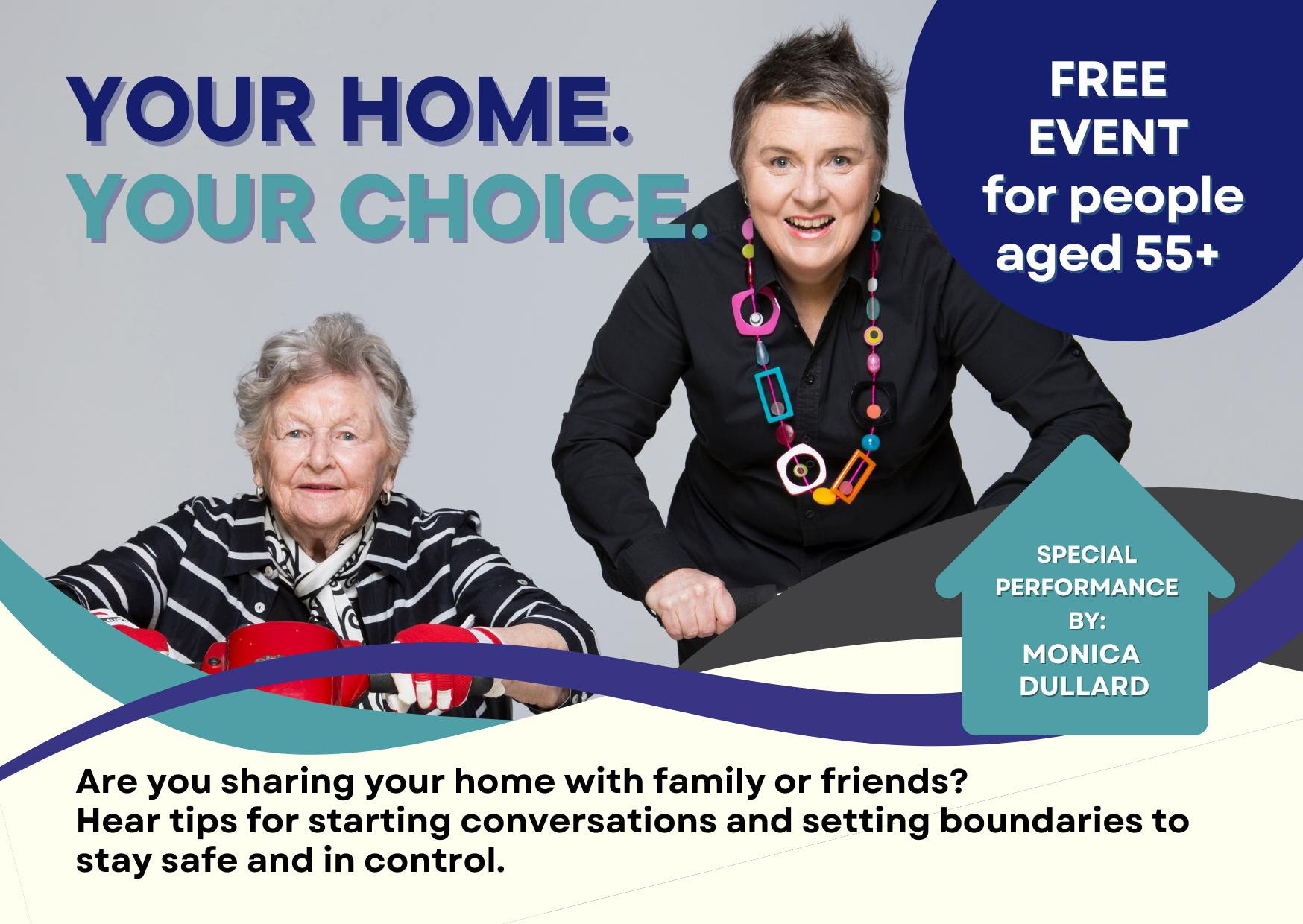
The message and imagery in this postcard can be used for community forums that talk about sharing your home with family and friends, and having conversations on setting boundaries to stay safe and in control.
Your Life Your Choice

The message and imagery in this postcard can be used for community forums that talk about managing your finances and decision making, and planning for Wills and Enduring Powers of Attorney.
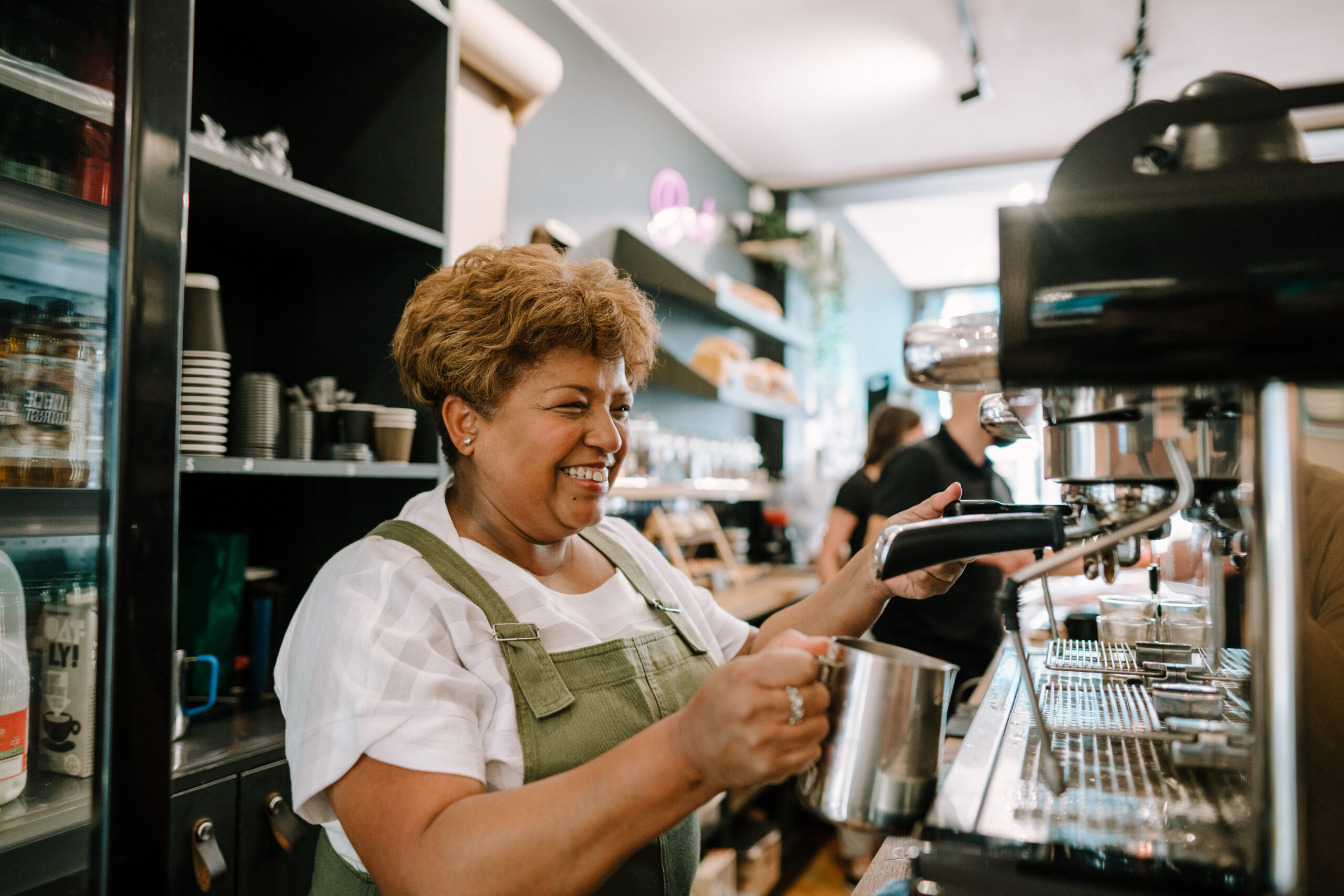
Age Without Limits has created a free library showing positive and realistic images of people aged 50 and over.
There are over 3000 images of people doing everyday activities such as socialising, working, excercising and enjoying life.
The photos are available for anyone to download and use for free.

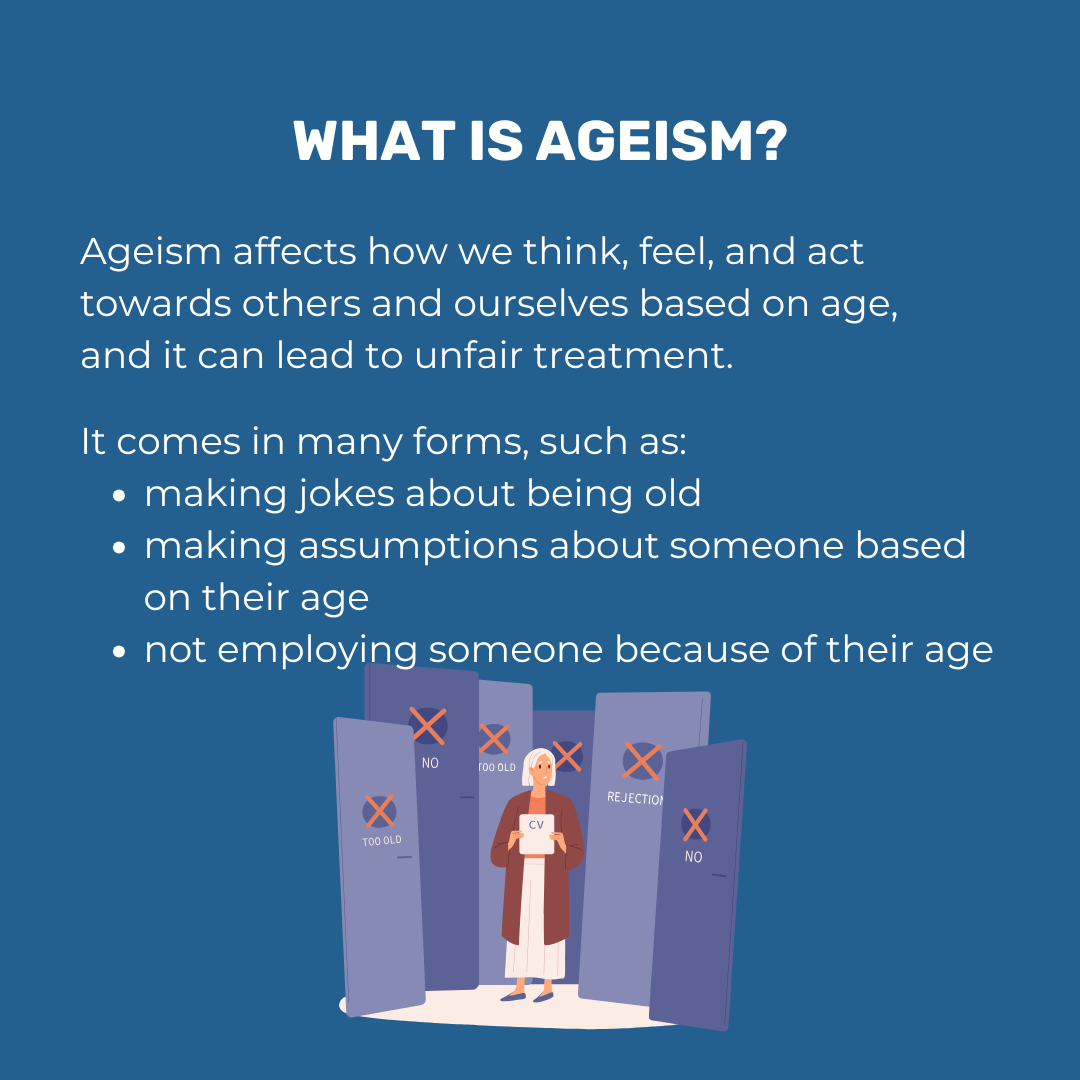
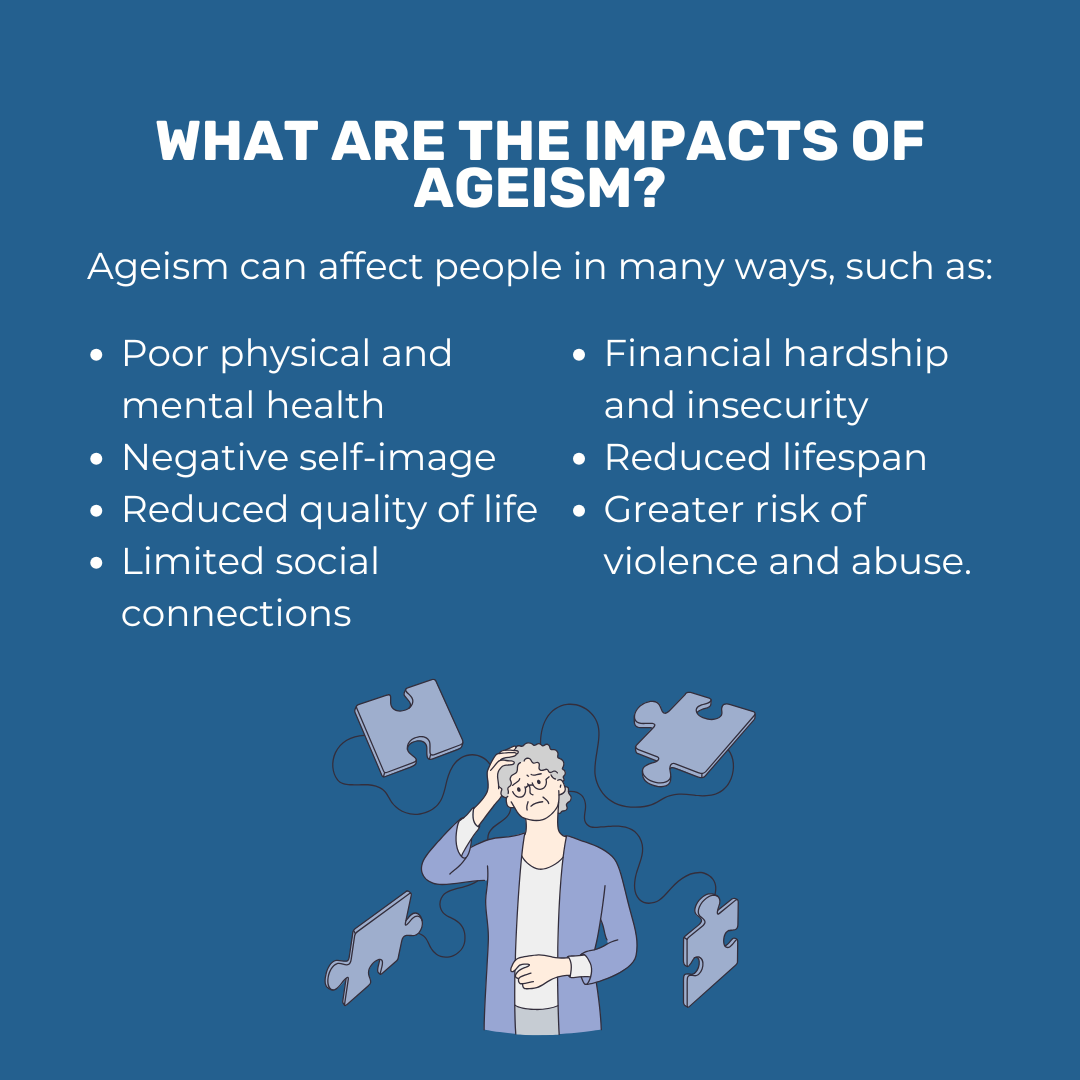
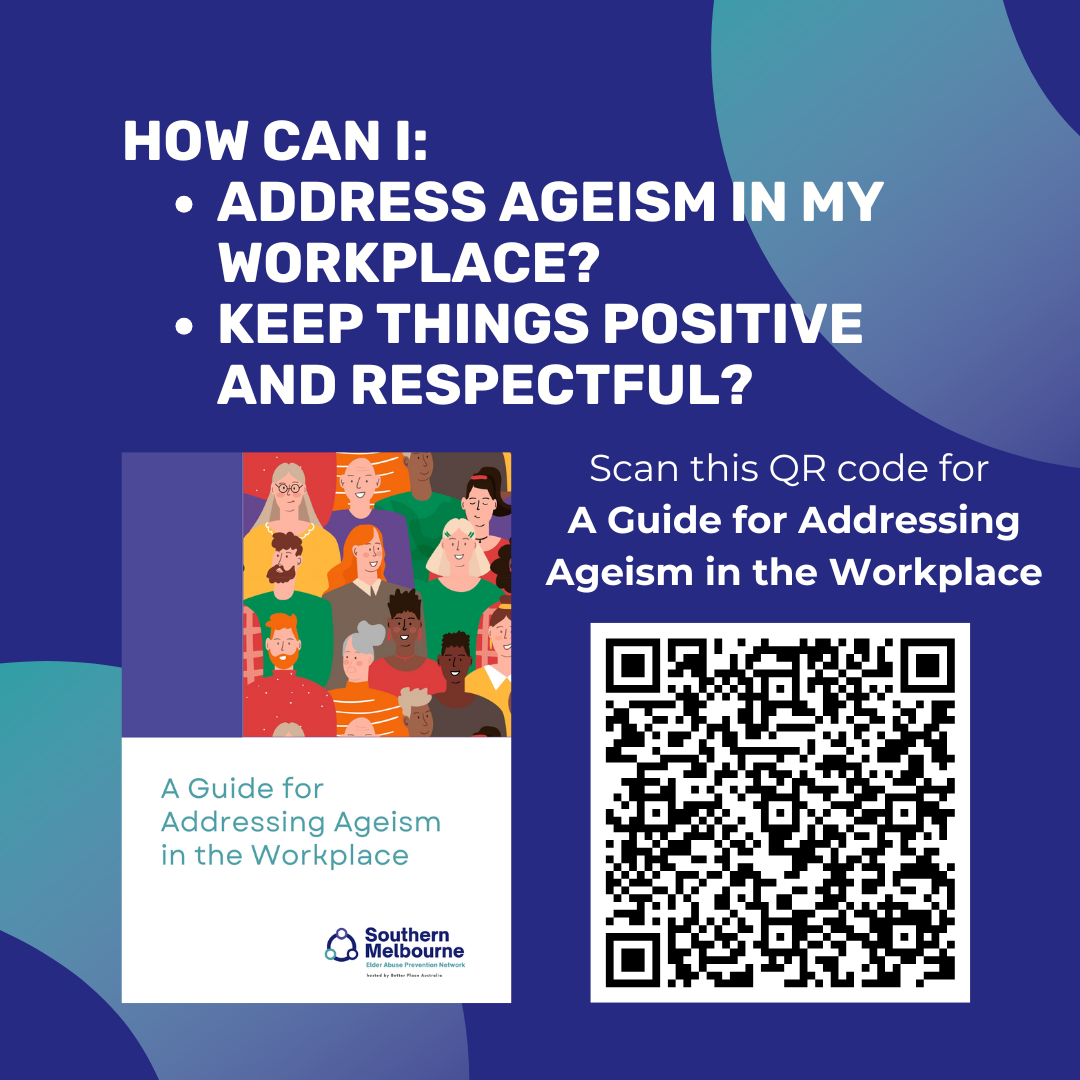
Be part of a society that respects, values and celebrates everyone at every age.
Workplace ageism is often unseen and accepted, and many people don’t see how it affects others.
Today is Ageism Awareness Day – let’s change the conversation.
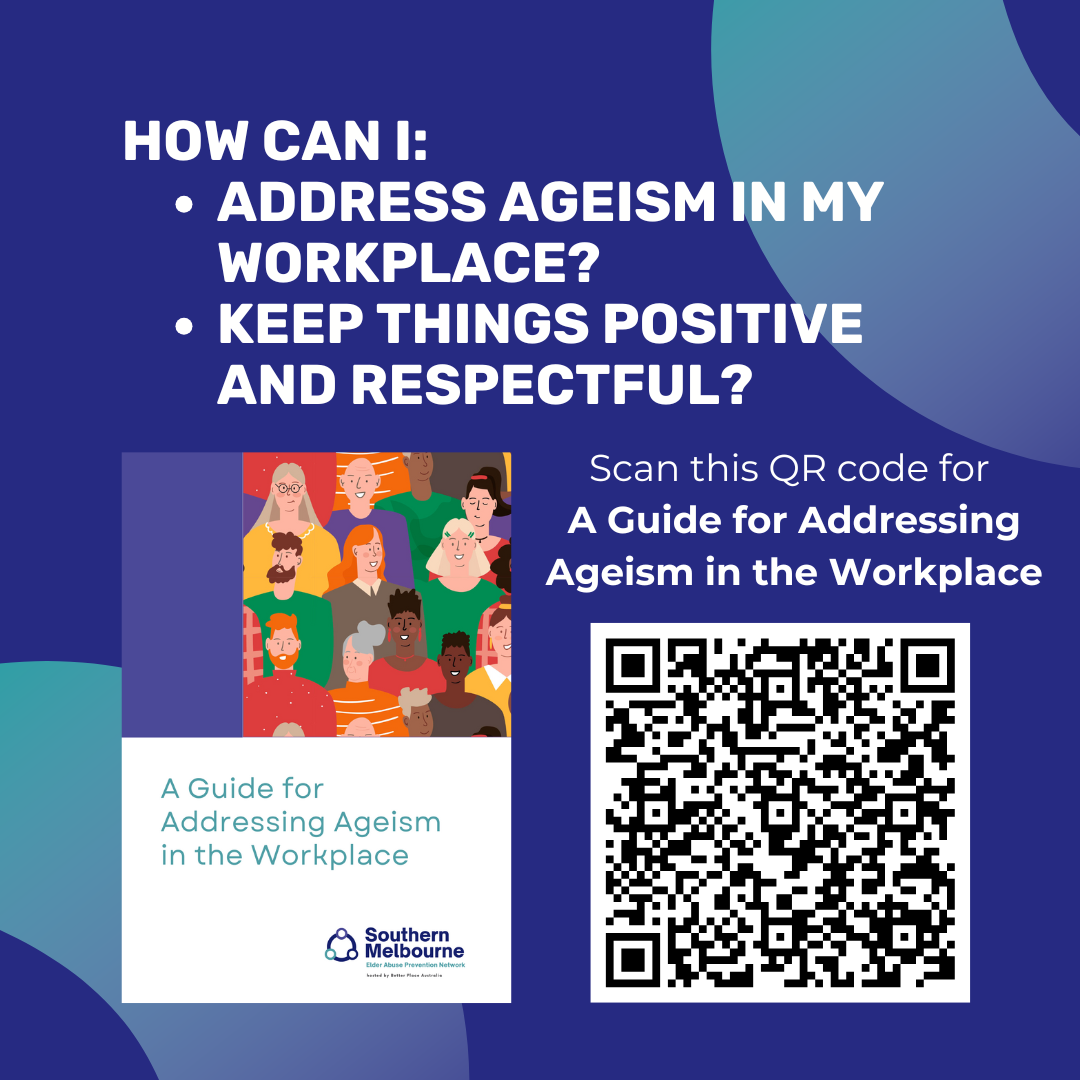
Use this guide to speak up when you see or hear ageism.
Scan the QR code to download the Guide.
#AgeismAwarenessDay #TalkAboutAgeism #InclusiveWorkplace #reframeageing #ageismawareness #ageismintheworkplace
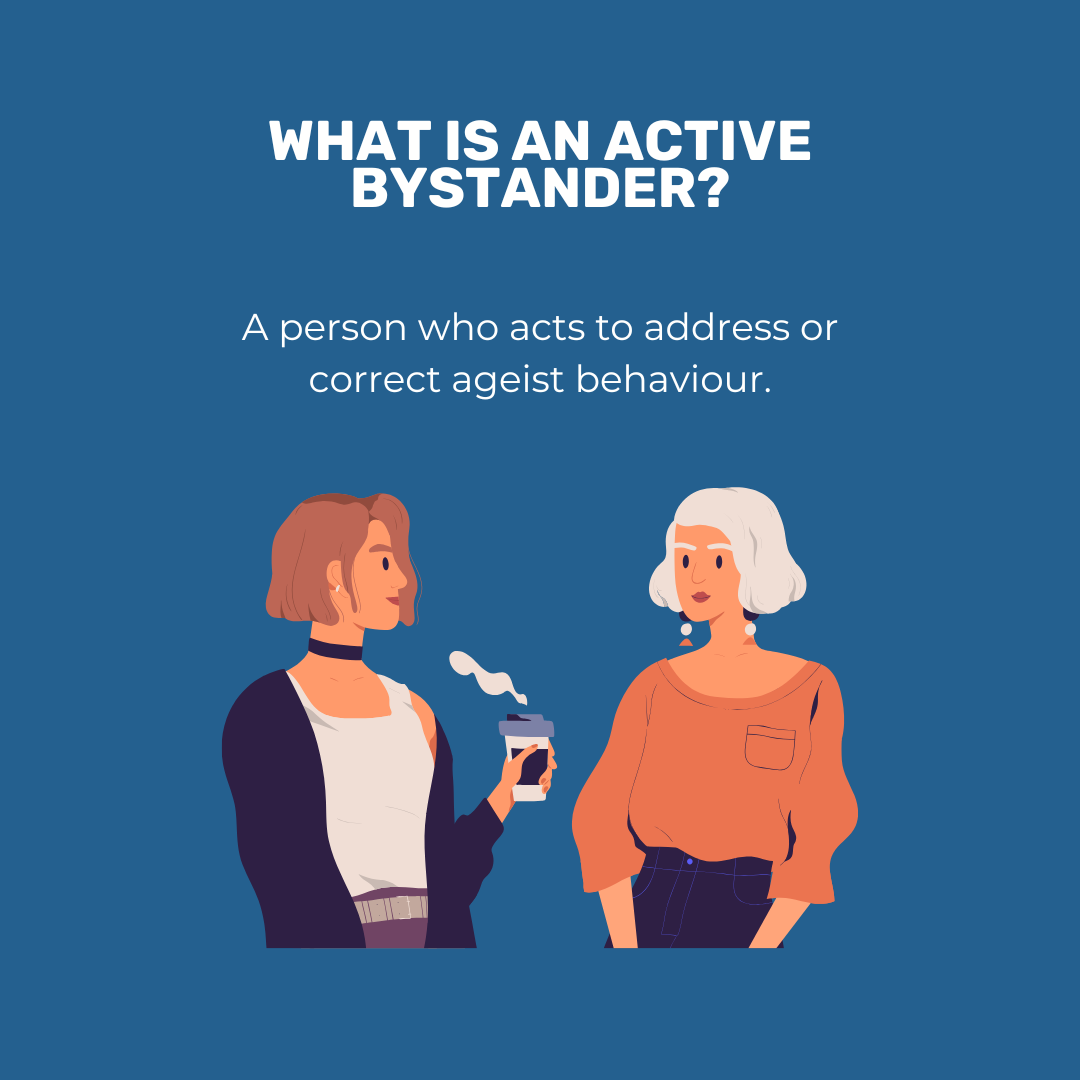
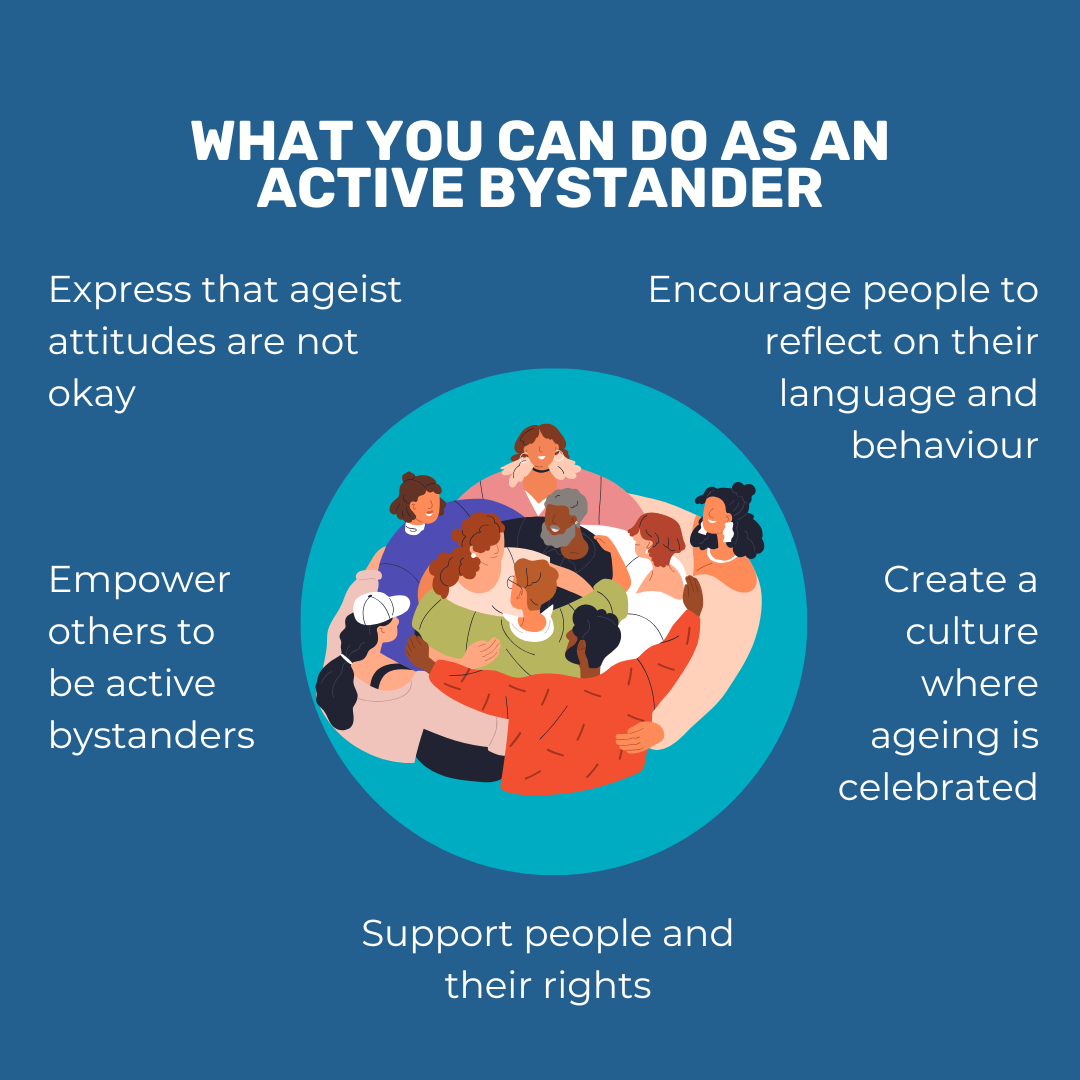
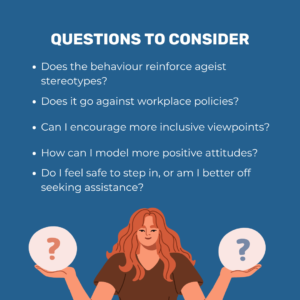
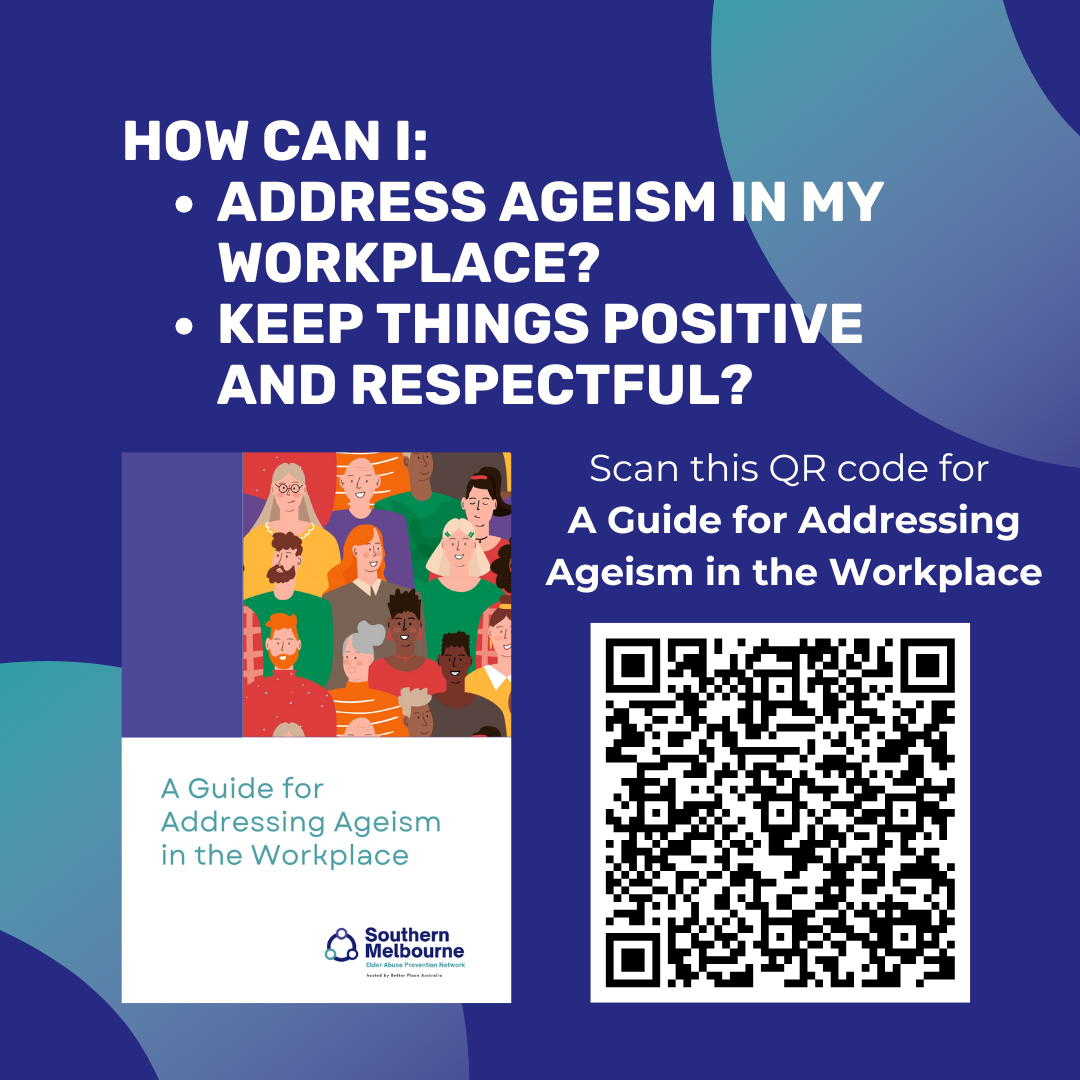
Be part of a society that steps in and plays a powerful role to address ageism.
Sometimes we don’t know how to respond and stepping in can take practice.
When we are an active bystander, we can support people and their rights and create a culture where every age is celebrated.
Scan the QR code to download the Guide.
#AgeismAwarenessDay #TalkAboutAgeism #InclusiveWorkplace #reframeageing #ageismawareness #ageismintheworkplace
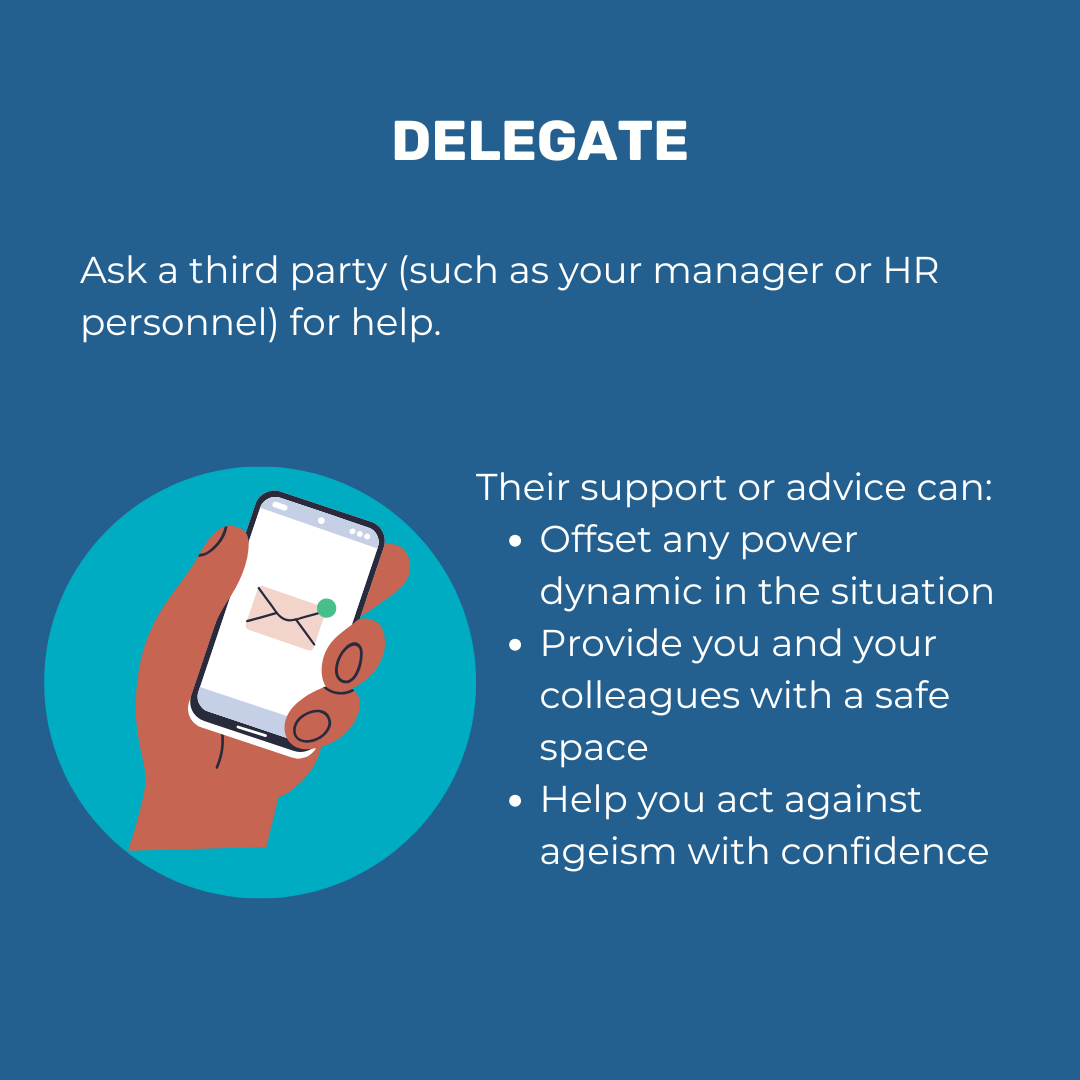
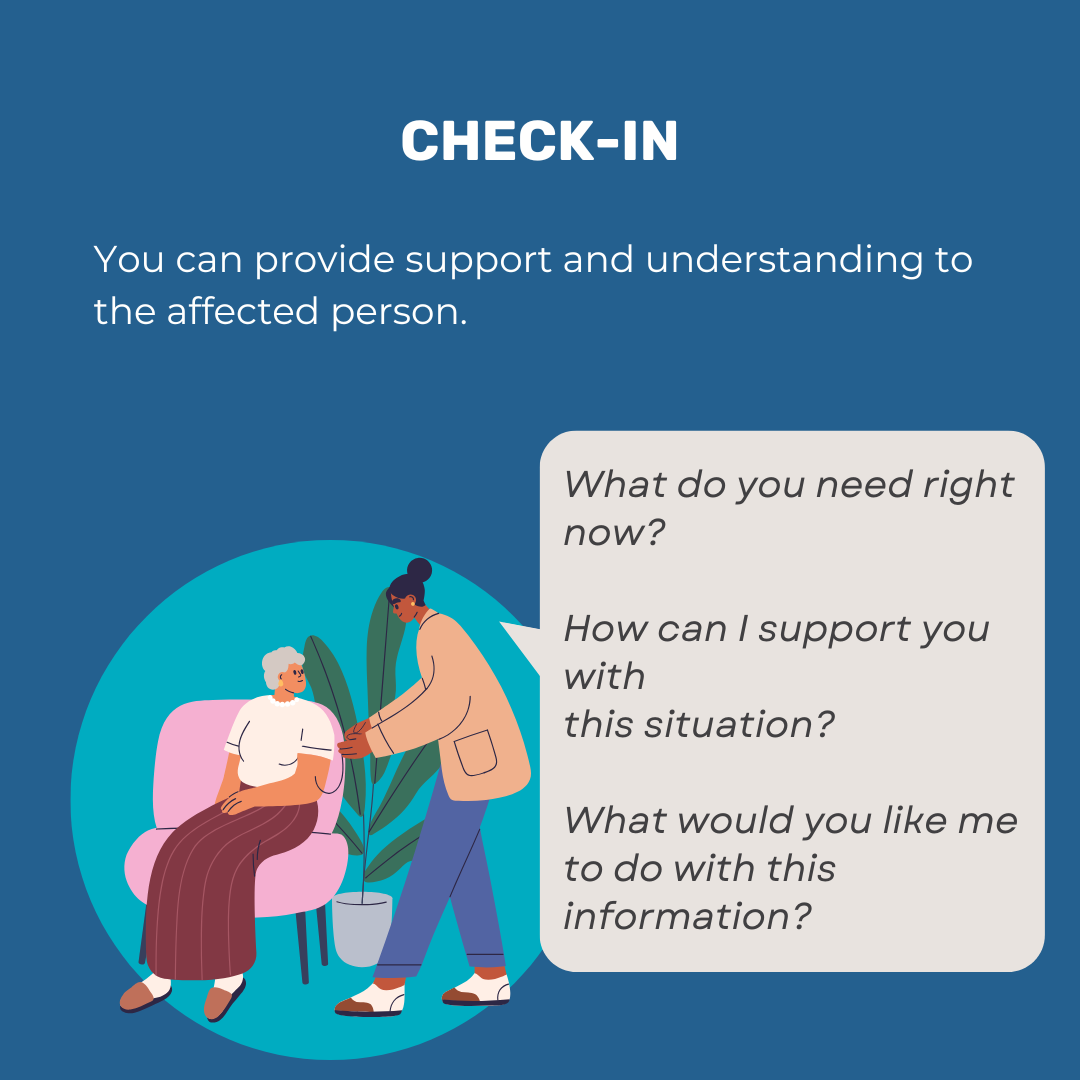
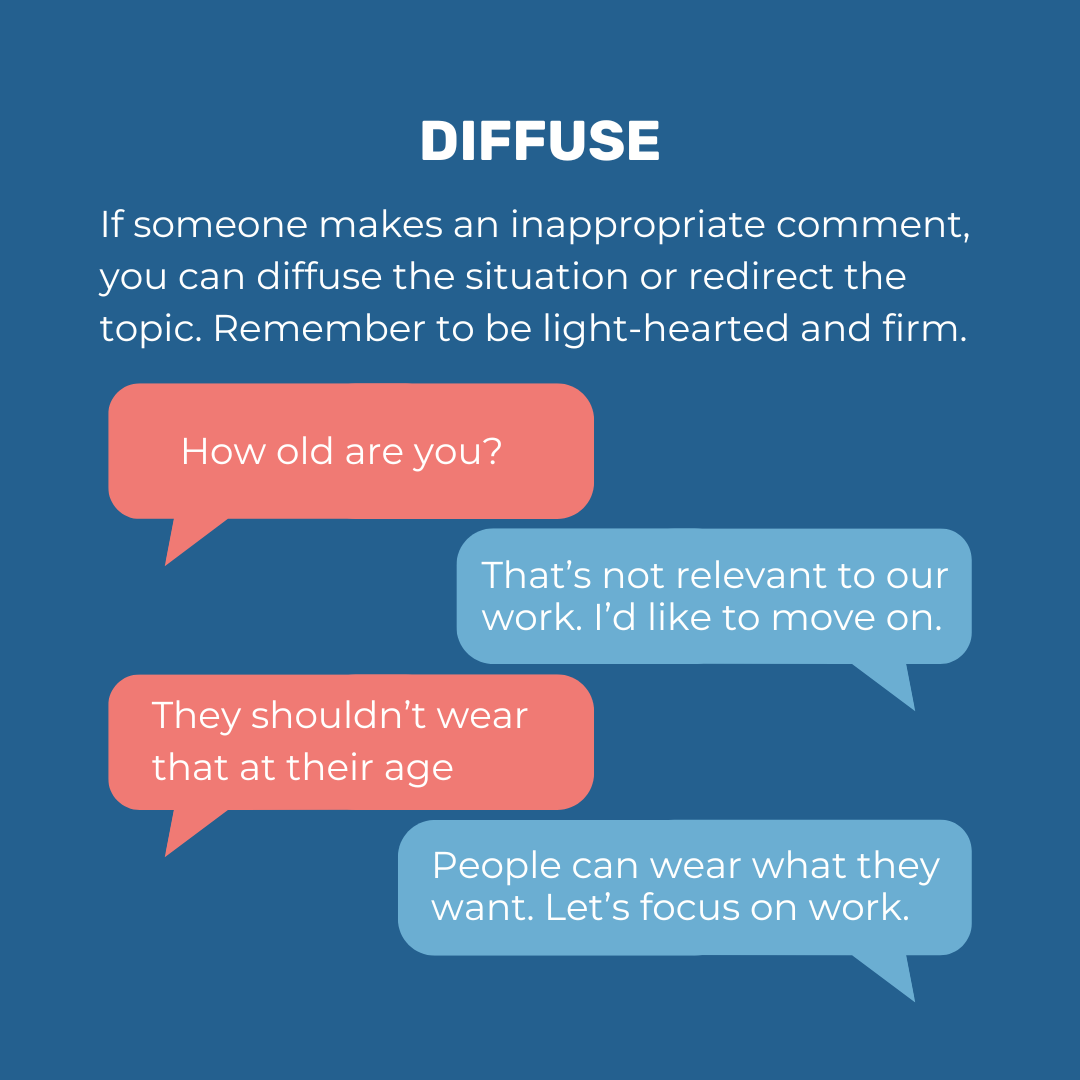
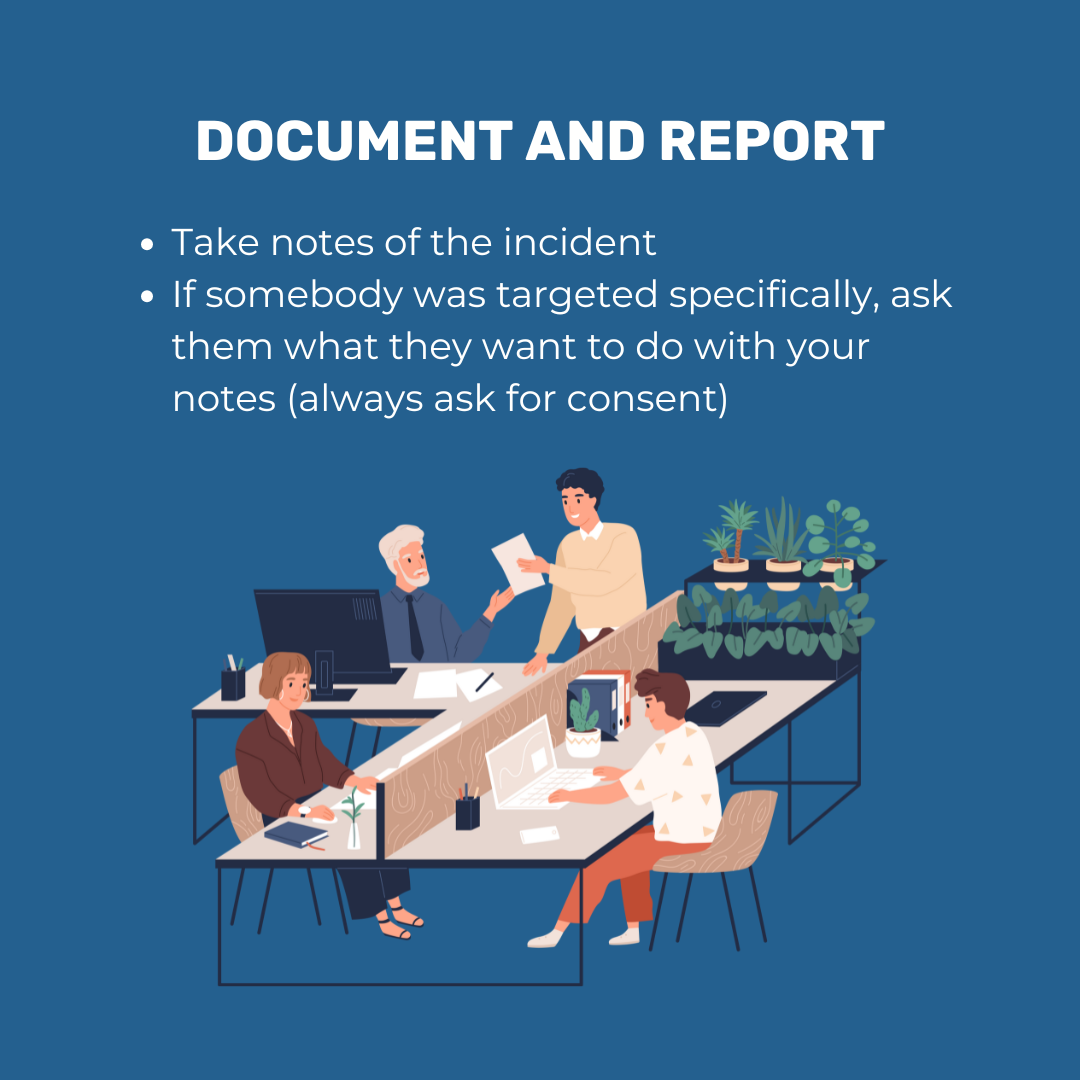
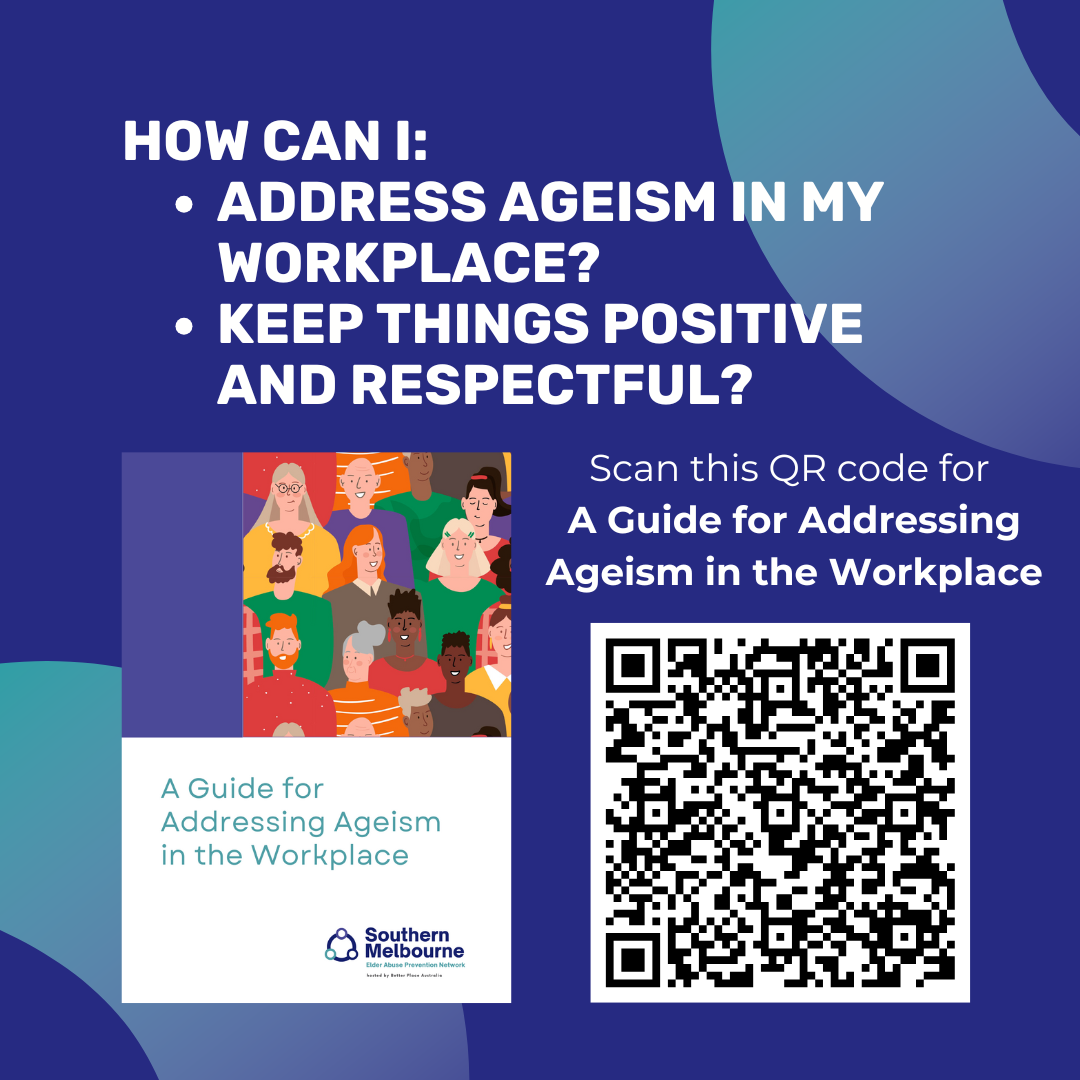
Be part of a community that takes action to address ageism.
Sometimes we don’t know there are different ways to respond.
When we know what to say and do, we can confidently respond in positive and respectful ways. Or we can always ask for help.
Scan the QR code to download the Guide.
#AgeismAwarenessDay #TalkAboutAgeism #InclusiveWorkplace #reframeageing #ageismawareness #ageismintheworkplace
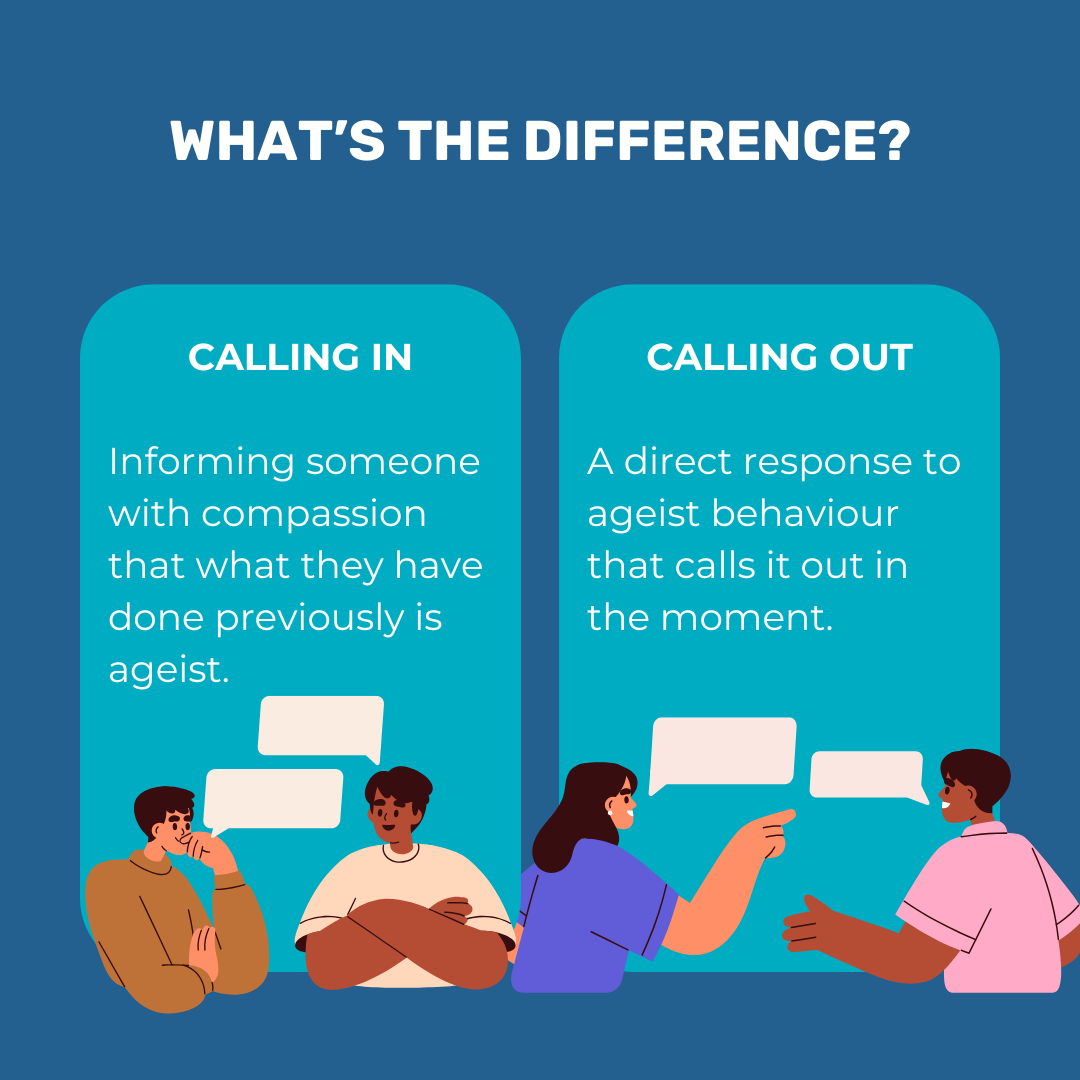
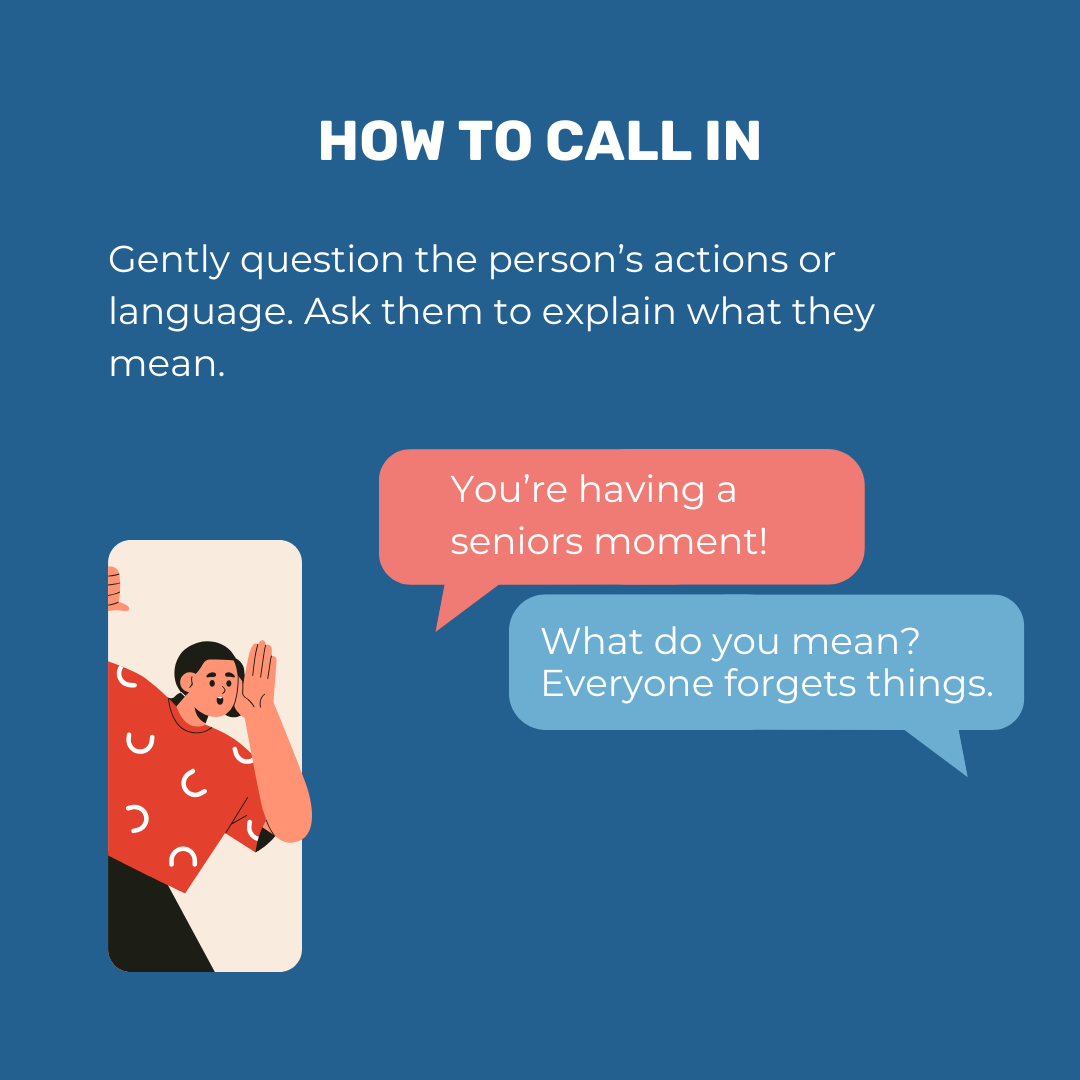
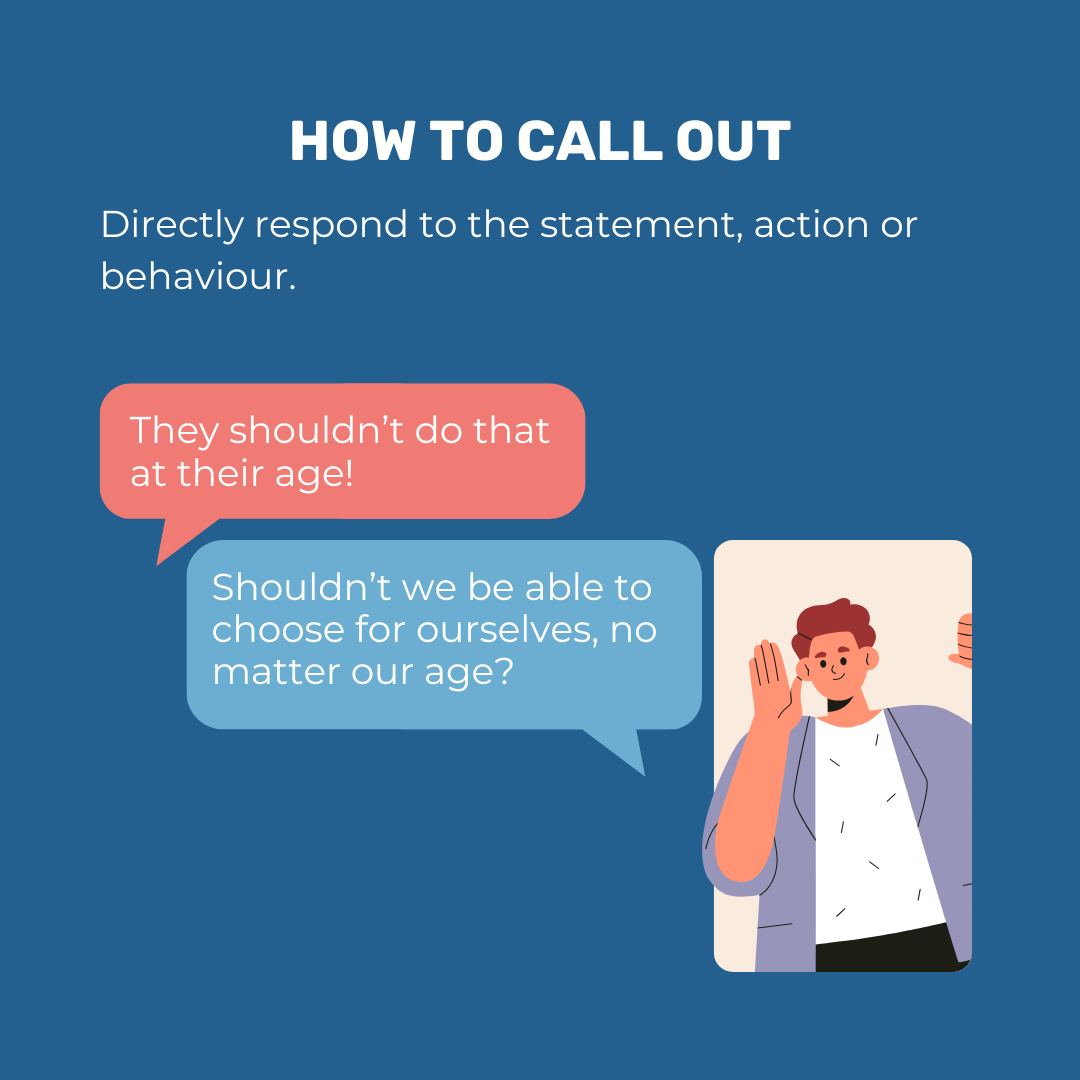
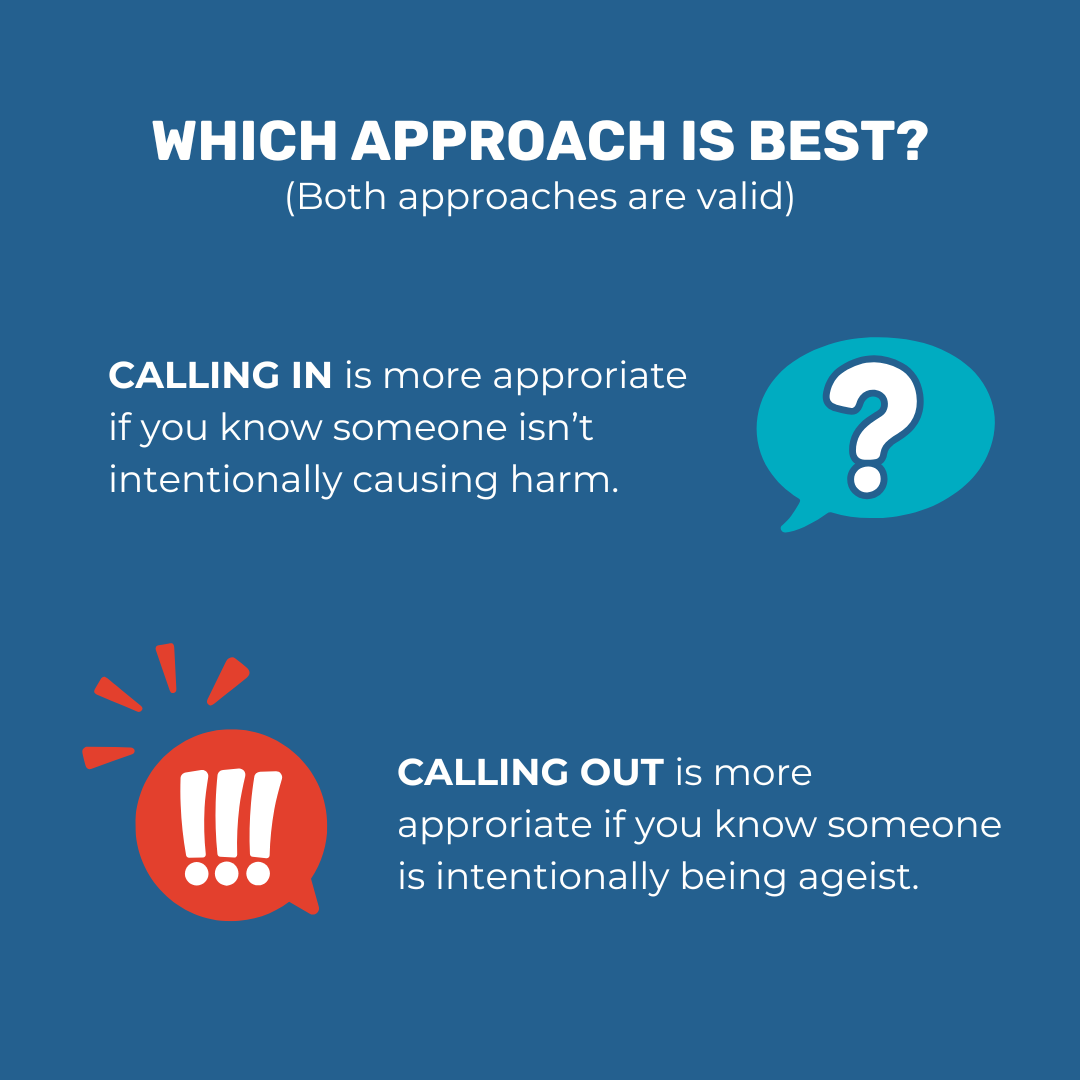
Communities that call in and call out help challenge ageism with honesty and compassion.
We may not always know the difference and which approach is best.
Learn about calling in and calling out ageism and when to use each approach.
Scan the QR code to download the Guide.
#AgeismAwarenessDay #TalkAboutAgeism #InclusiveWorkplace #reframeageing #ageismawareness #ageismintheworkplace
 AUSTRALIAN HUMAN RIGHTS COMMISSION
Employee biases against older and younger generations hindering Australian workforce productivity

THE BENEVOLENT SOCIETY
Imagine a World Without Ageism
EVERY AGE COUNTS
Am I Ageist? Quiz
The Hon Dr Kay Patterson AO, Age Discrimination Commissioner at the Human Rights Commission, introduces the learning forum and talks about our rights and how to protect them.
Gary Ferguson, Education Coordinator at Seniors Rights Victoria, talks about staying socially connected and getting support to plan ahead.
From Better Place Australia, Catherine talks about family pressures and supported decision making.
Phil, a community member, talks about being aware that something isn’t right and where to get support.
Link for the learning forum: https://youtu.be/3Ccsx6jKZHI
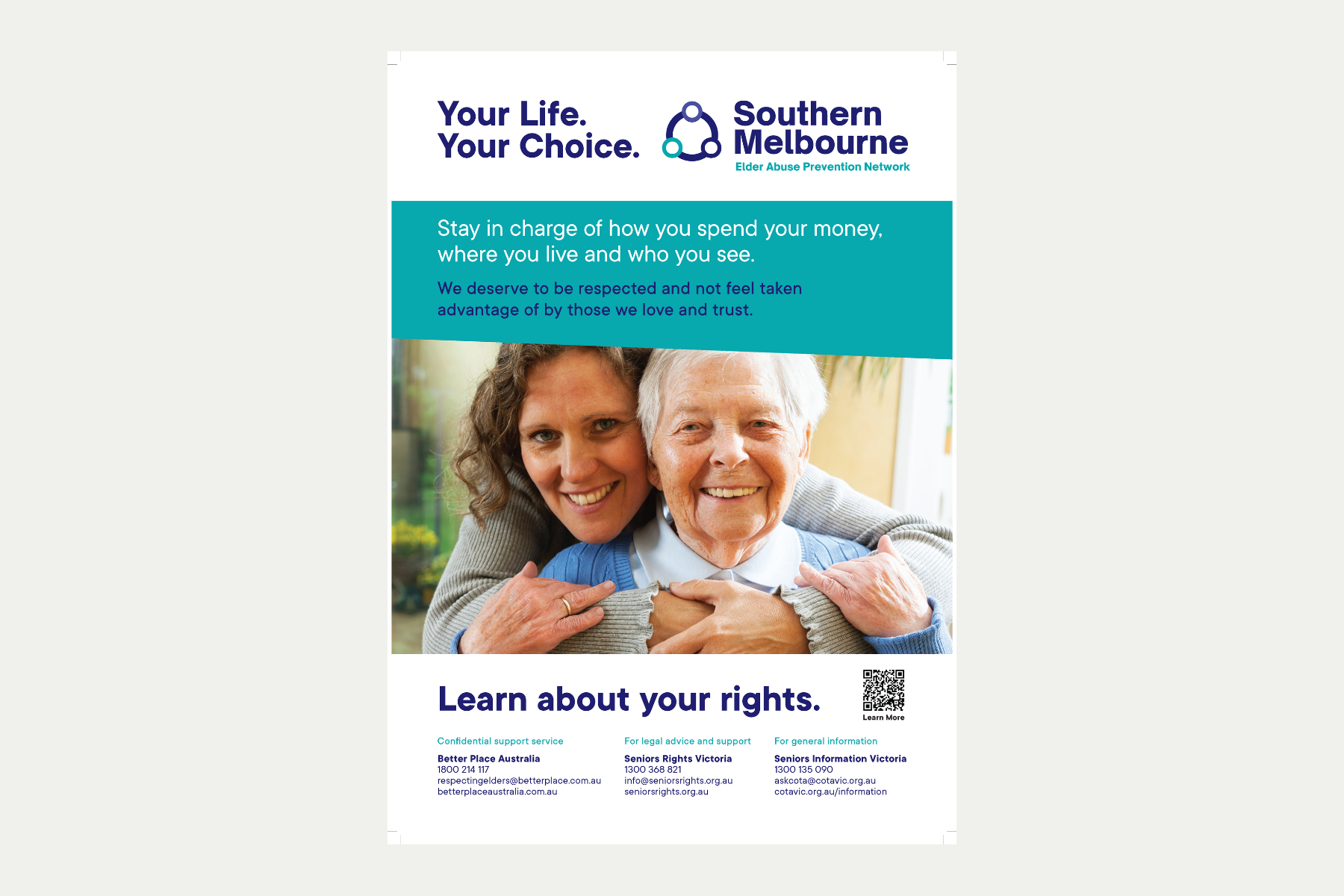
Display this poster in your organisation or community group to communicate about our rights and staying safe and in control as we age.
There’s a QR code that links to the Learning Forum on YouTube and contact details for where to get confidential support.
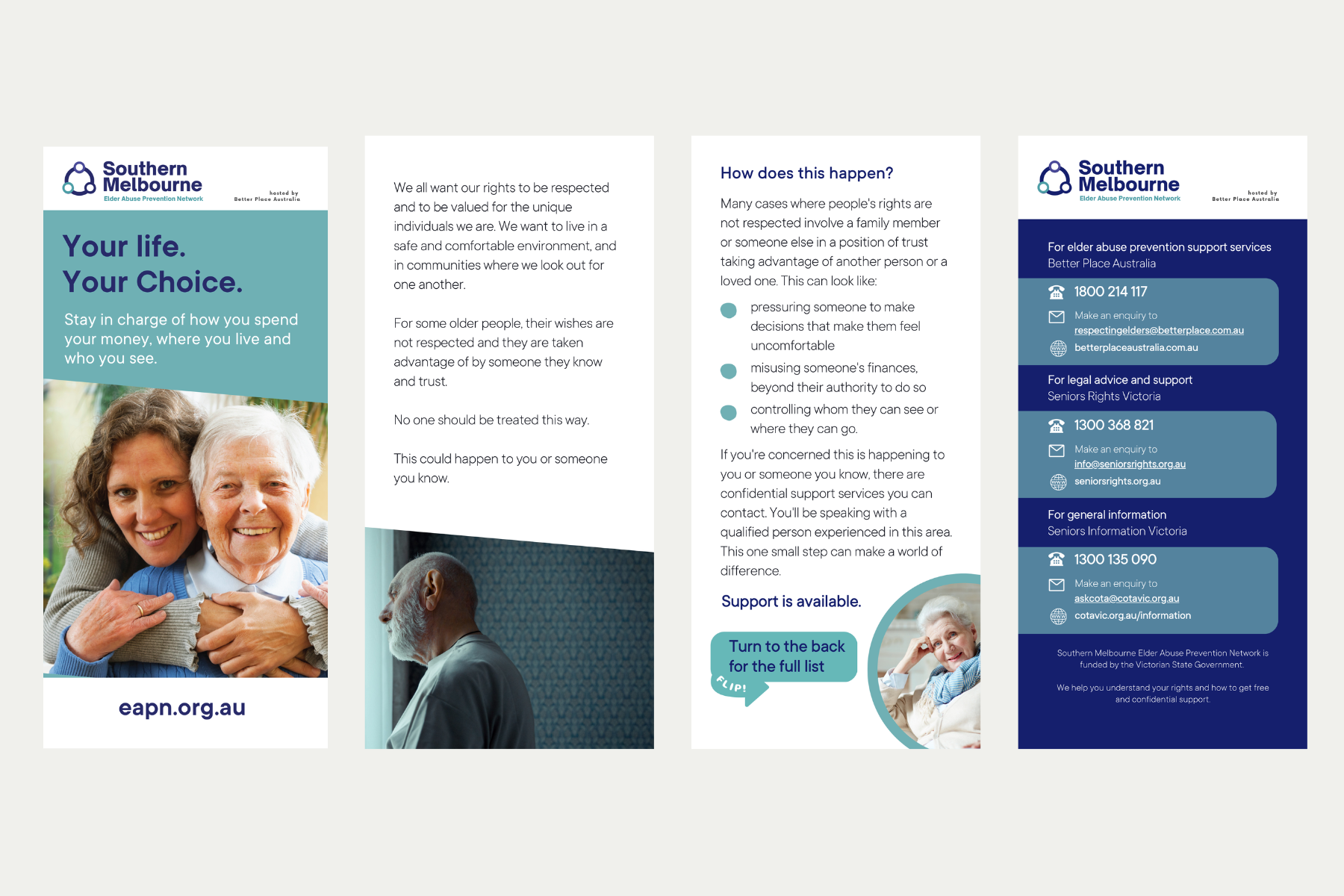
The DL Brochure provides information about our rights, what to look out for in family relationships, and where to get confidential support.

Download the tiles and share the messages on your social media platforms. It will empower our community, families and carers to learn about our rights to stay safe and in control as we age.
By Holstep Health and the Elder Abuse Prevention Network North West Metro
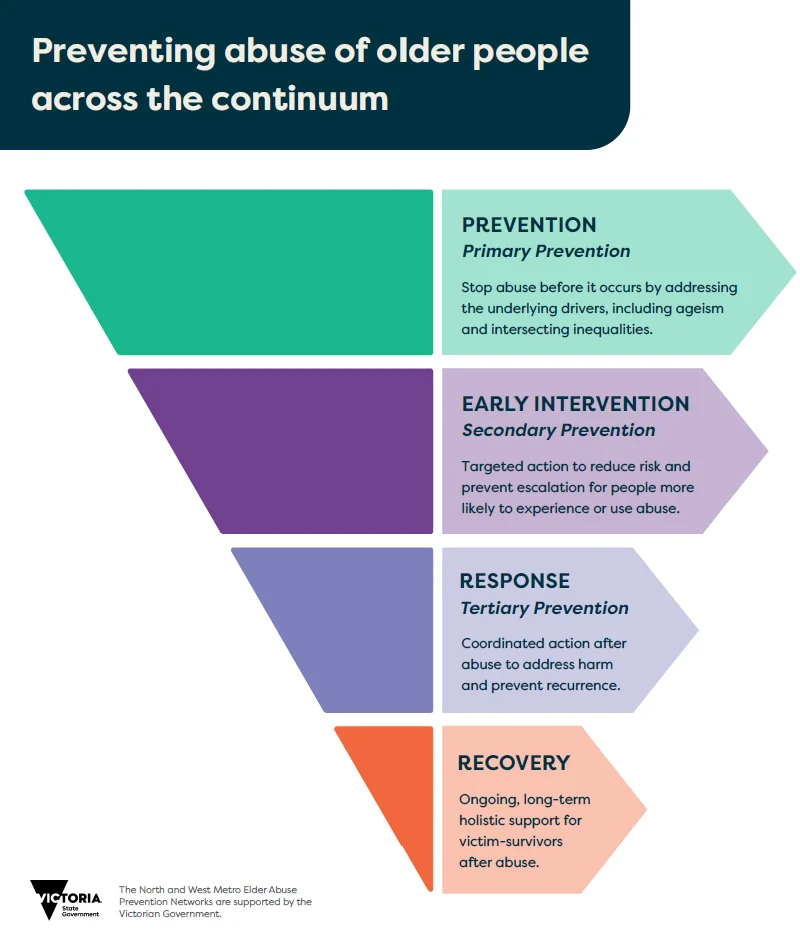
A practical poster that explains the differences between primary prevention, early intervention, response, and recovery in the context of elder abuse.
By Eastern Community Legal Centre and the Eastern Elder Abuse Network
A practical guide to support the strenghten the role of the Elder Abuse Prevention Networks working to drive social change at a local level, through a Community of Practice approach.
By the Australian Human Rights Commission
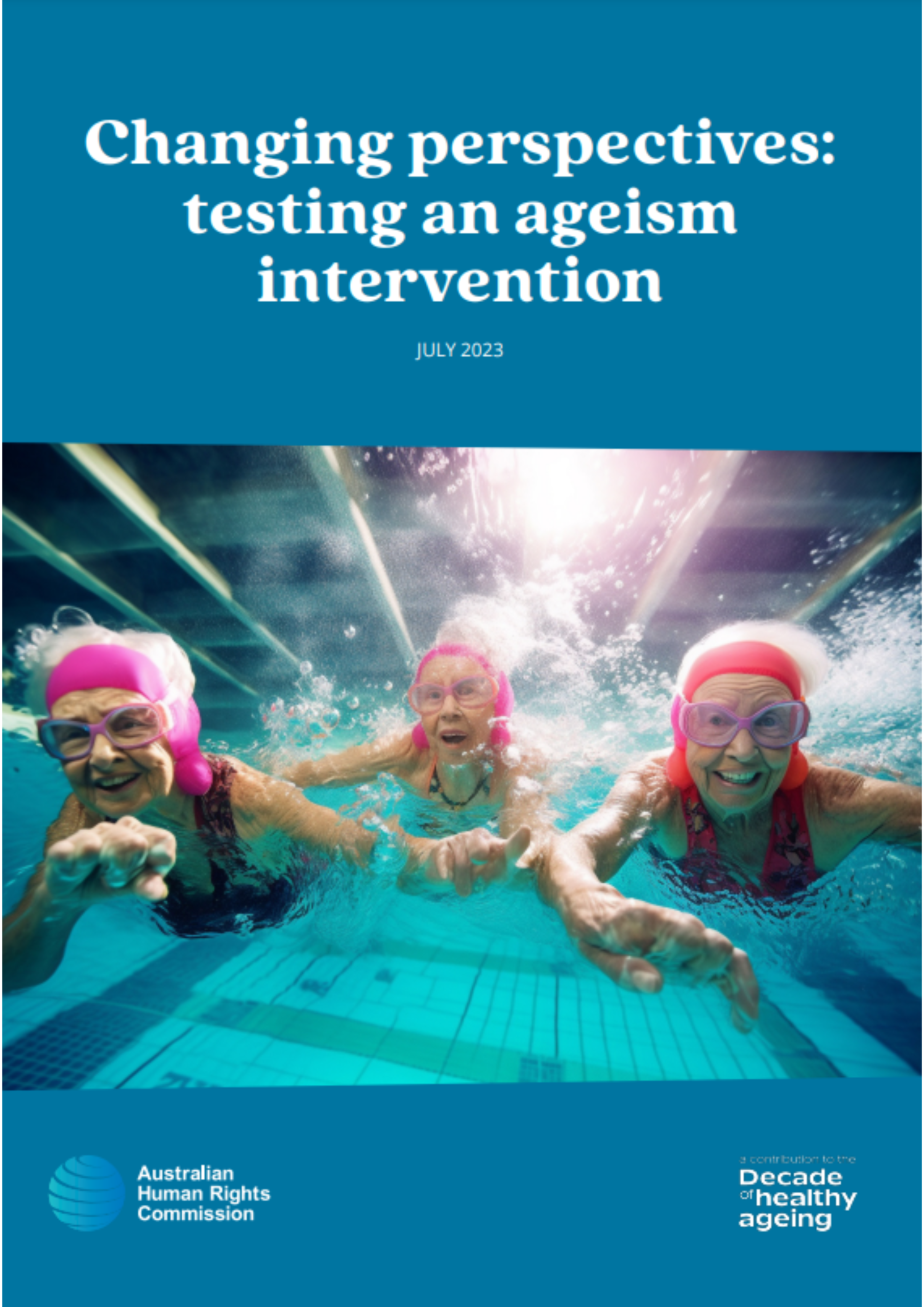
New research shows that a brief, one-off ageism awareness session can be highly effective in shifting people’s attitudes and behaviour that may be sustained over time.
By the Eastern Community Legal Centre
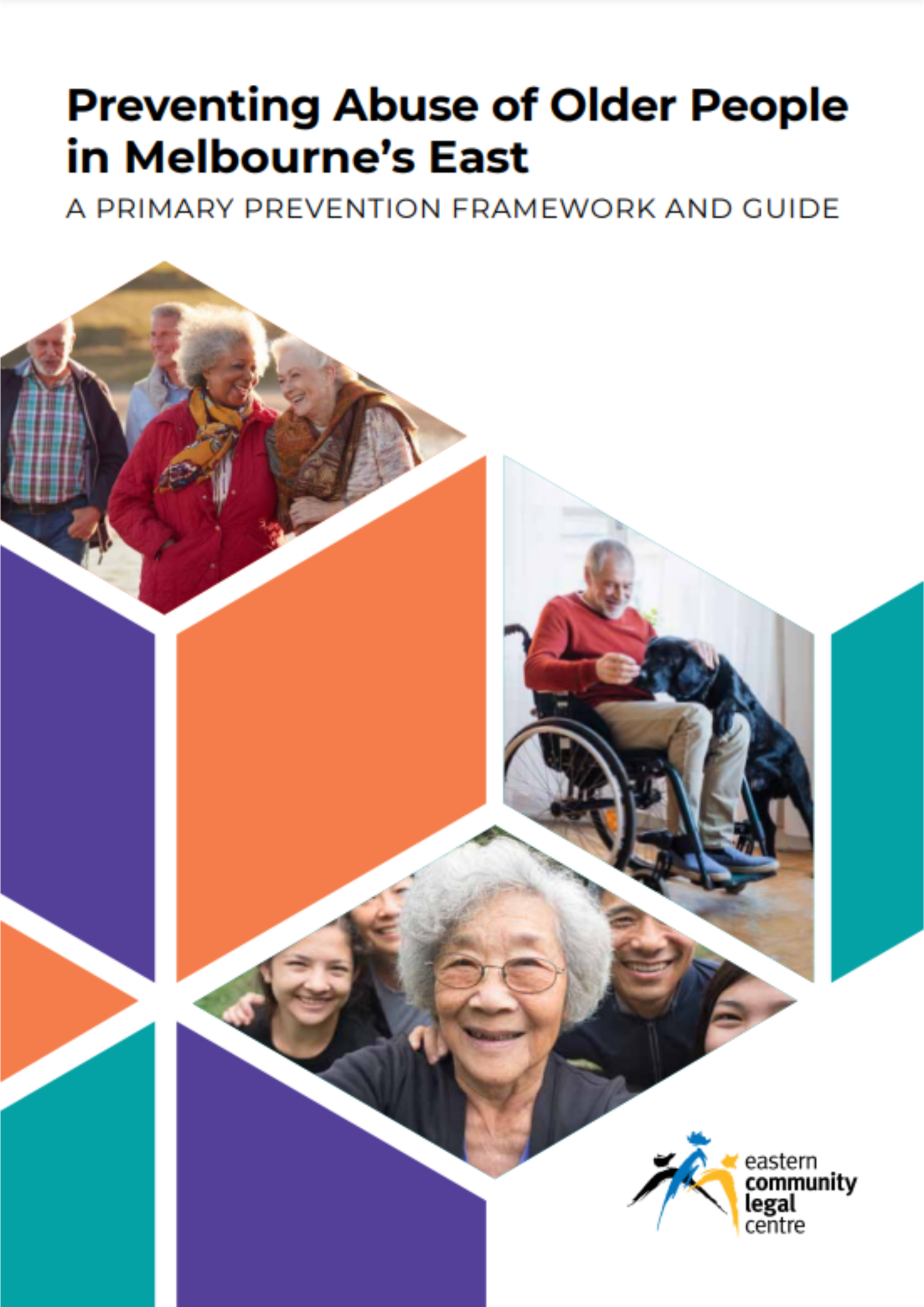
The Framework is a high level document that provides a roadmap to guide efforts to address and prevent the abuse of older people in Melbourne’s East. The Framework seeks to provide consistent messaging and language, and presents a shared framework for action.
Endorsed by the Council of Attorneys-General
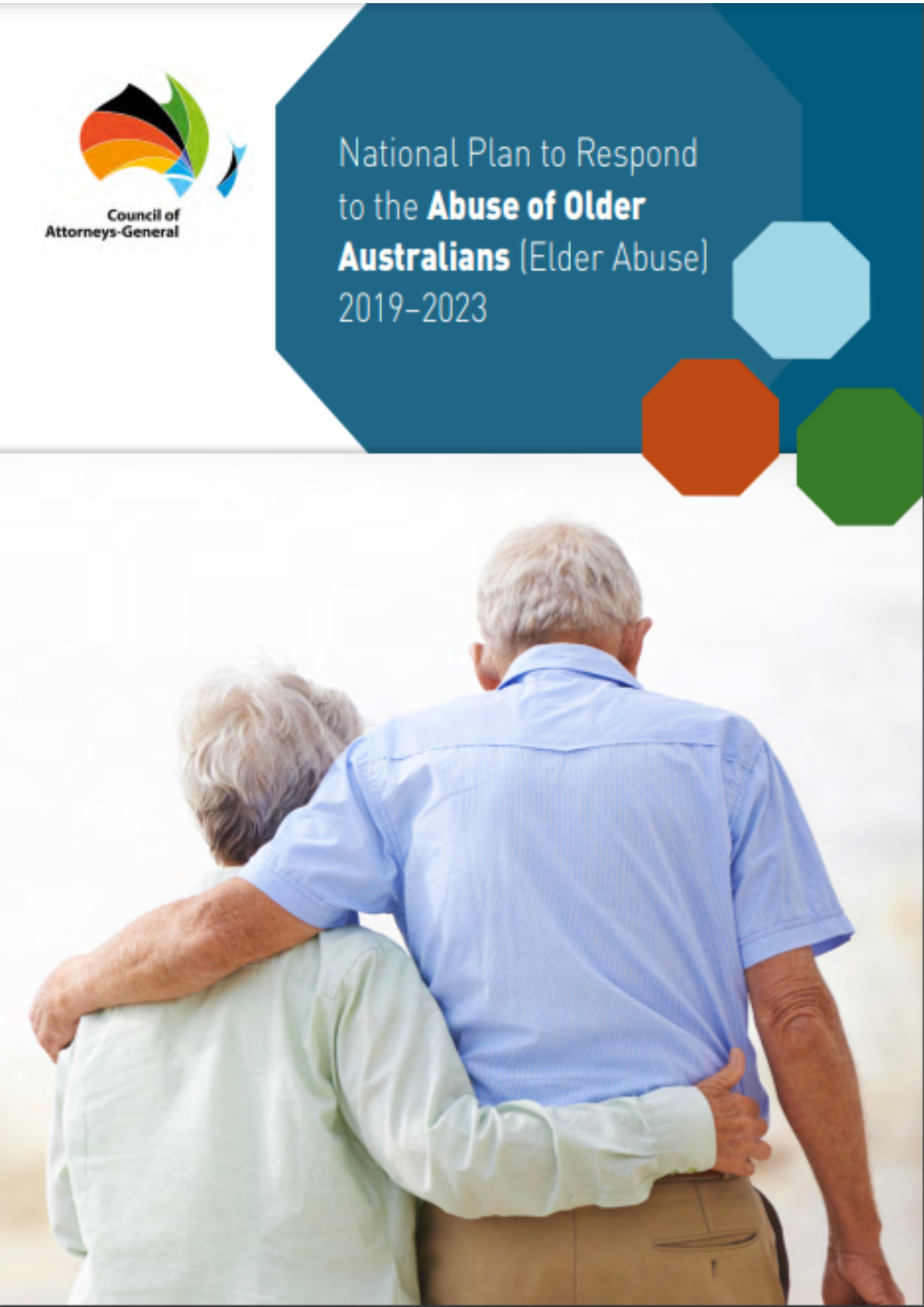 The National Plan provides a framework for action over the next four years, to respond to abuse of older people. It sets out the commitment of the Australian Government and each of the eight state and territory governments to undertake research, provide services, and develop policy and law reforms to address a complex problem in need of a comprehensive response.
By the Australian Institute of Family Studies, Australian Government
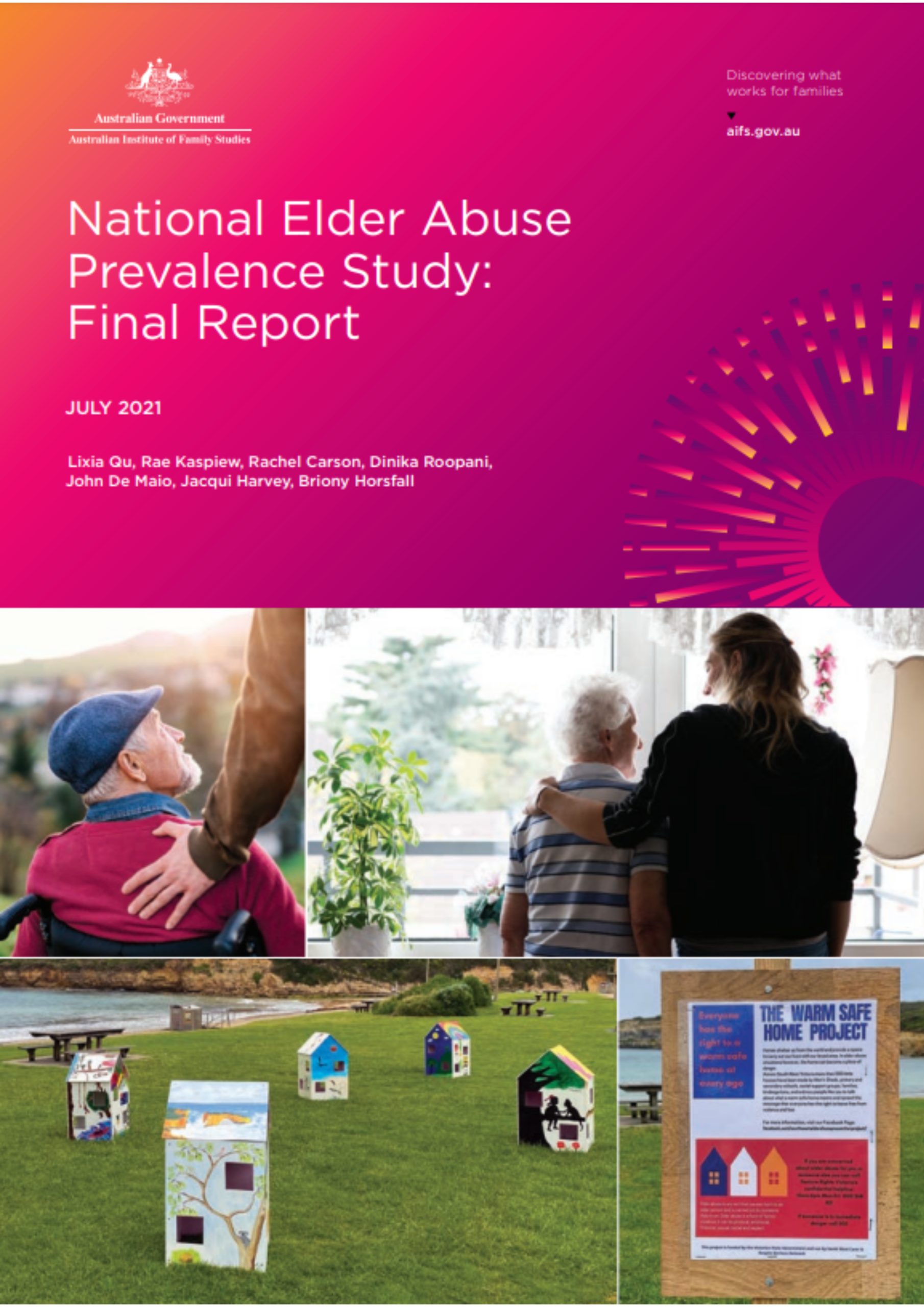 As part of the National Plan to Respond to the Abuse of Older Australians, the Attorney-General’s Department commissioned the most extensive empirical examination of elder abuse in Australia to date, the National Elder Abuse Prevalence Study. This report presents the findings of that research program.
By the National Ageing Research Institute in partnership with Seniors Rights Victoria
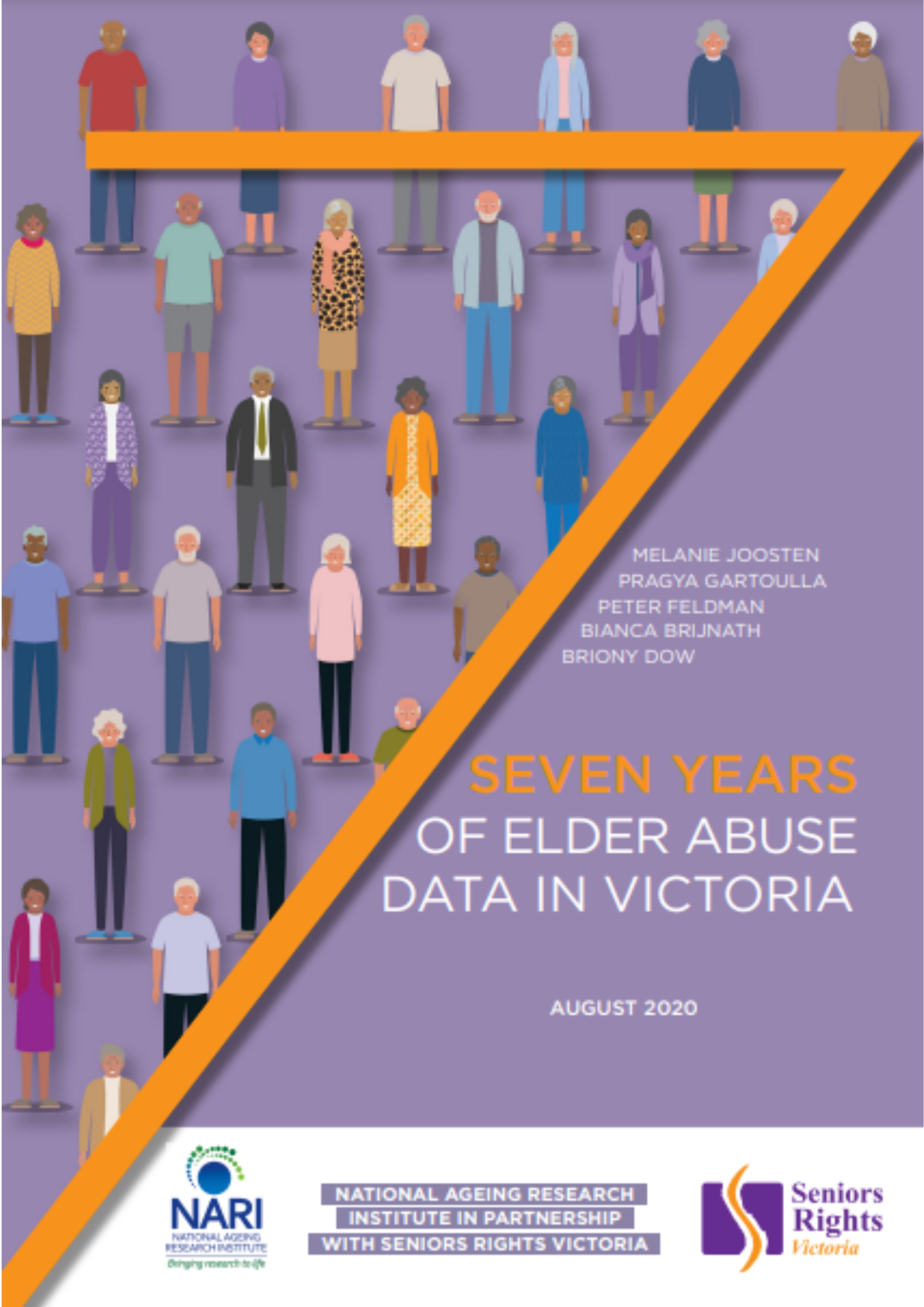
A practical poster that explains the differences between primary prevention, early intervention, response, and recovery in the context of elder abuse.
By the National Ageing Research Institute for Respect Victoria
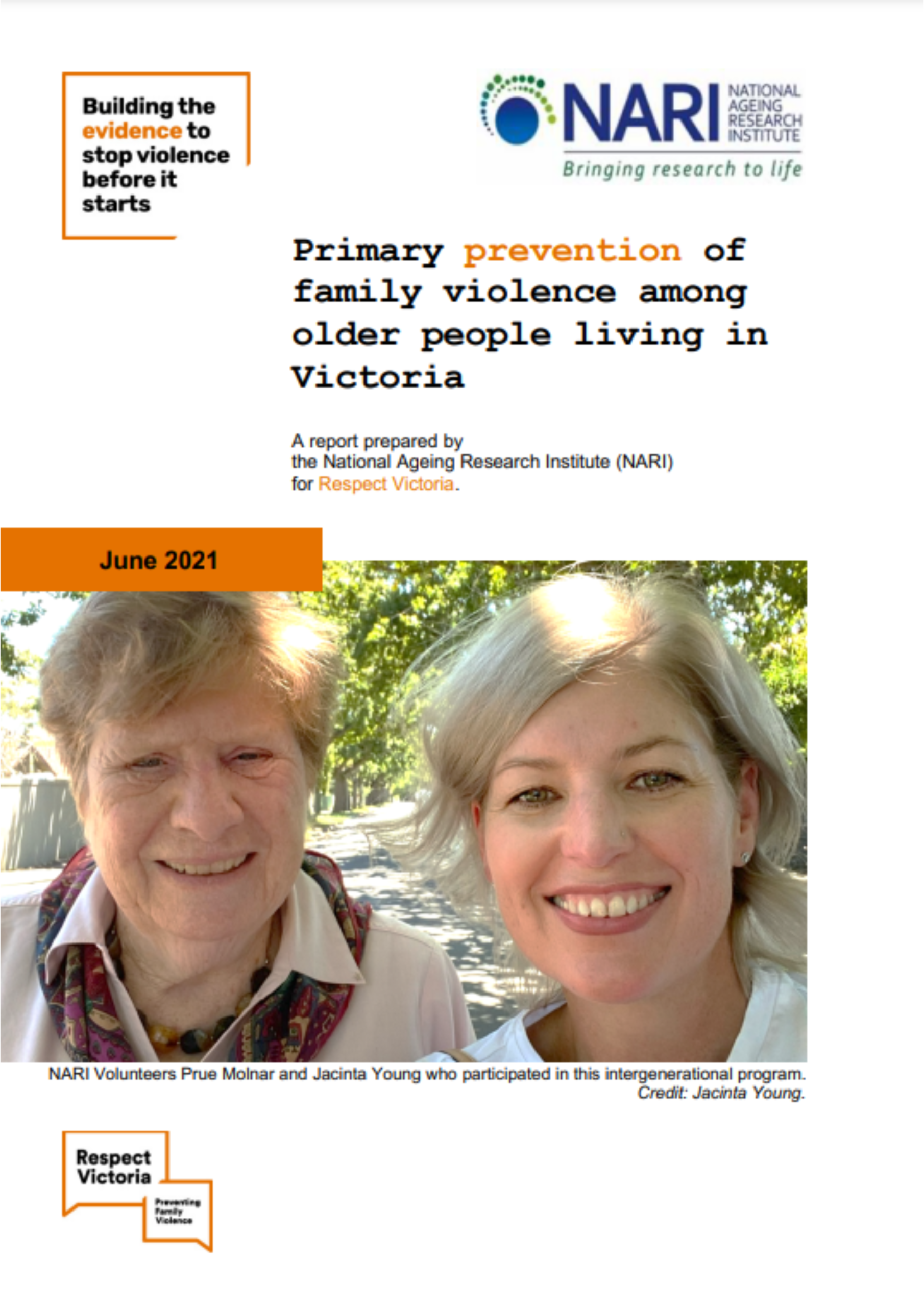
This resource details the research undertaken about the drivers of intergenerational family violence among older people, the local strategies developed for prevention, and recommendations for uptake of findings in policy and practice.